“Son of man, pose a riddle, and speak a parable to the house of Israel.”
Ezekiel 17:2
Tell all the truth but tell it slant.
Emily Dickinson
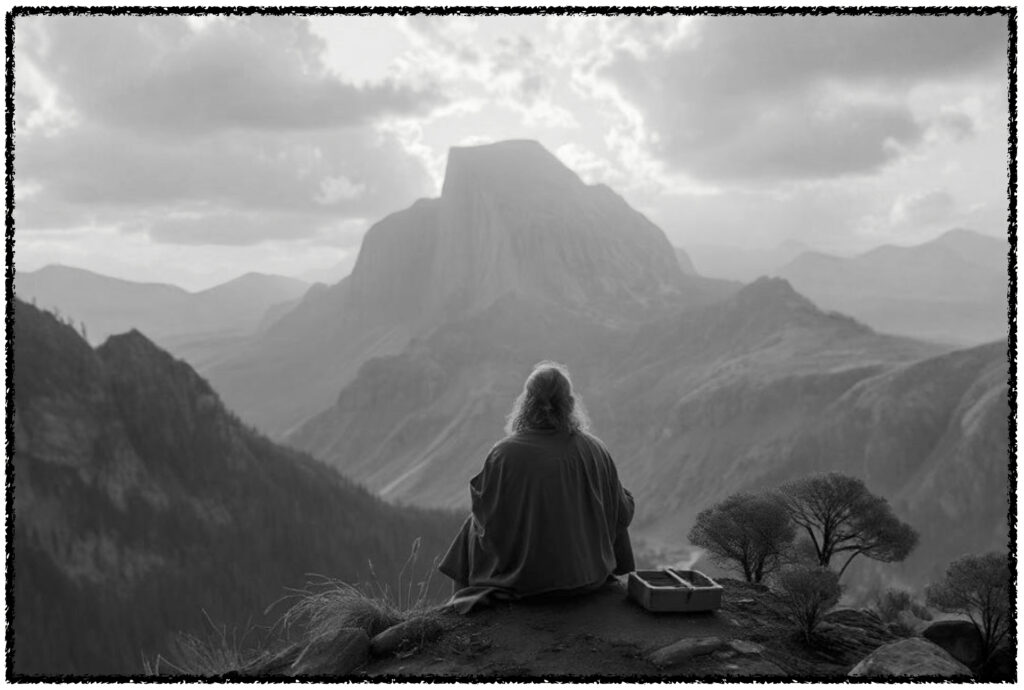
He sat before the mountain, which was not a real mountain, and waited, for such is the way of these things. Then, from the summit, falling into his mind like snow, came a white voice, which was also not a voice, saying:
This mountain is not of my making.
Yes, answered the man.
This voice, too, is an artifice.
I have suspected it. But whose artifice, mine or yours?
The house clammers with those who do not know the difference.
I am often uncertain. How am I to know?
The poet knows that the mountain and the voice are his own. He fashions the rubble of experience into a monument. The true poet will not bow down to his work or insist that others do so. But the prophetic player believes that he stands, privileged and apart, upon Sinai itself and that his words raise an altar which obligates fire from heaven and demands deference on earth.
The prophets of Baal.
God cannot be conjured.
They claim the same Spirit and quote the same book.
They speak visions of their own minds and prophesy from their own spirits. They promise peace to those who follow after their own hearts and thus embolden the rebellious so that they do not turn from their sin. Is not the word of the Lord like fire? Is it not like a hammer that smashes rock?
But their conviction seems honest; their passion, genuine.
Sincerity is not truth. Zeal is not truth.
Are there no true prophets in the house?
Within the din. They do not mistake volume for truth.
How can they be discerned from the others?
As ale is discerned from froth. Froth is agitated, unstable, and mostly air. It floats to the top, and although it too is of ale, it is fizzy and empty of taste. Froth makes for a pretty draught, but it is incidental and fleeting.
There seems much froth in the house.
Not all prophecy—even true prophecy—is created equal.
Why is this so?
The Spirit is extravagant. Judgment has been entrusted to the house.
The prophet is not the enforcer.
The poet may choose his vocation. The prophet does not appoint himself.
What is the poet’s task?
Interpolation.
And the prophet’s?
Futility.
You cannot mean this!
They will not listen. They have never listened.
Where then is the prophet’s place?
Where, indeed.