Author: Fred

  • Edifice Ex

    And Jesus said to him, “Do you see these great buildings? There will not be left here one stone upon another that will not be thrown down.”
    Mark 13:2


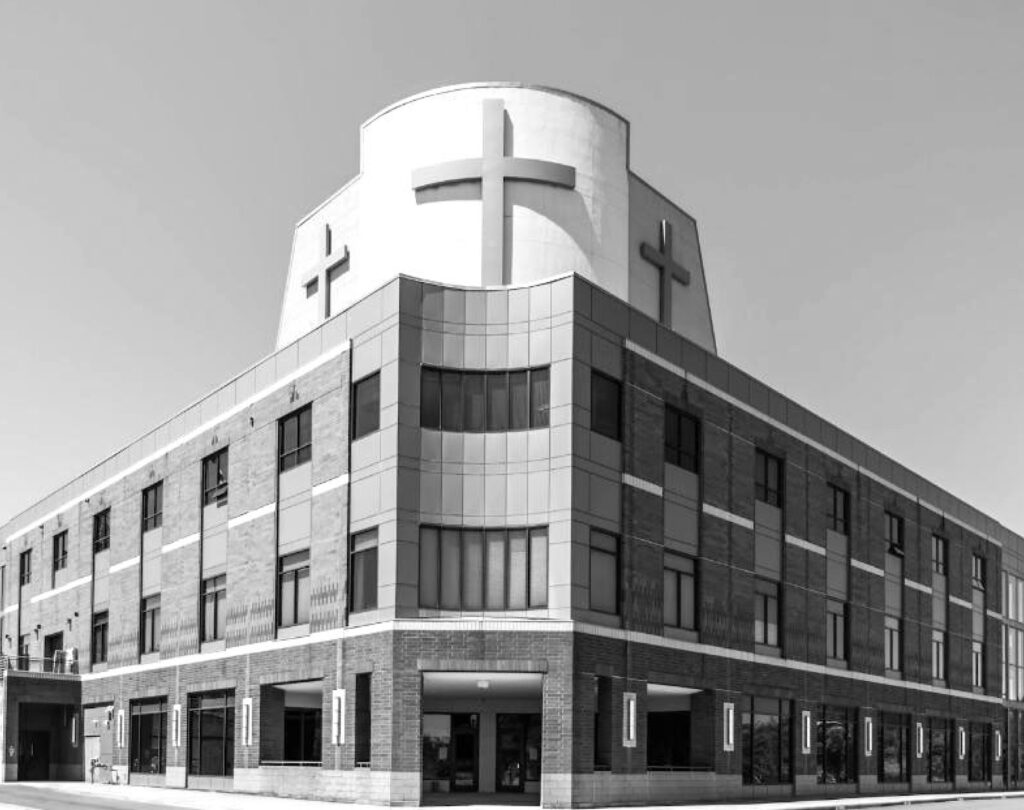
    Enthroned atop a knoll overlooking the 205 just south of Portland rises a massive church complex. Commuters are hailed by a modern, multi-storied construction that could be mistaken for the campus of a giant Oregon tech company if it weren’t for three crosses boldly crowning the facility. The impressive façade, strategically angled toward the freeway, is intended to capture the 65mph attention and signify an attractive, thriving, and well-funded Christian enterprise. The statement is clear: this is a big, successful congregation—a brand unto itself.

    The precedent for grand religious architecture goes way back, of course. There are the shrines of ancient Egypt, the pagodas of Asia, the stately sanctuaries of Greece, and, perhaps greatest of all, Solomon’s magnificent temple in Jerusalem. The Christian contribution culminated in the many cathedrals erected across Europe during the Middle Ages. These imposing cathedrals were expressly designed to exhibit the grandeur and glory of God. As Pope Benedict XVI observed, “All the great works of art, the cathedrals—the Gothic cathedrals and the splendid Baroque churches—are a luminous sign of God, and thus are truly a manifestation, an epiphany of God.” Edifice as epiphany. Lofty appraisal indeed.

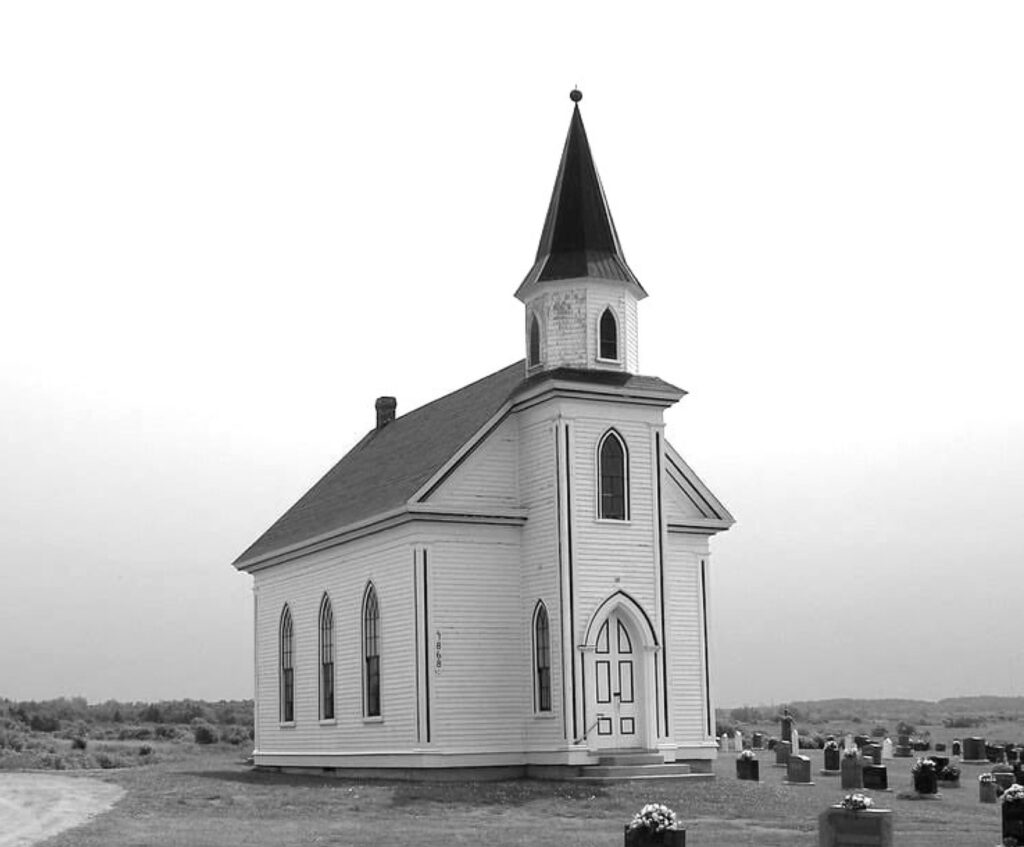
    By comparison, church buildings in the New World are far humbler. With the exception of a few notable examples in the big east coast cities, Americans tended to embrace smaller, simpler houses of worship. The Puritan spiritual identity found its expression in the plain white meeting hall which evolved westward into the iconic little steepled churches that still dot the rural American landscape. Although modest, these unassuming structures assumed the same divine manifestation as their ostentatious kin. Whether in a backwater village or on the vast, open prairies, a little white church visually signified the very presence of God.
    The advent of the American megachurch renewed the pursuit of gargantuan religious splendor. New titanic sanctuaries, dwarfing even the greatest Old World cathedrals, vie for dominance. Their jaw-dropping size overwhelms the eye, and for awestruck acolytes these proud glass and steel behemoths are proof-positive that the God of Grandeur is present and accounted for.

    For most of us, however, the most recognizable symbols of American Christianity are the neighborhood church buildings found in virtually every city and town. Functionally adorned, they have long signified, to believer and unbeliever alike, that God and his sanctioned tabernacles dwell in our midst. Though less commanding than Europe’s imperial cathedrals, Pope Benedict’s observation holds true for these commonplace tabernacles too: the edifice is an epiphany.

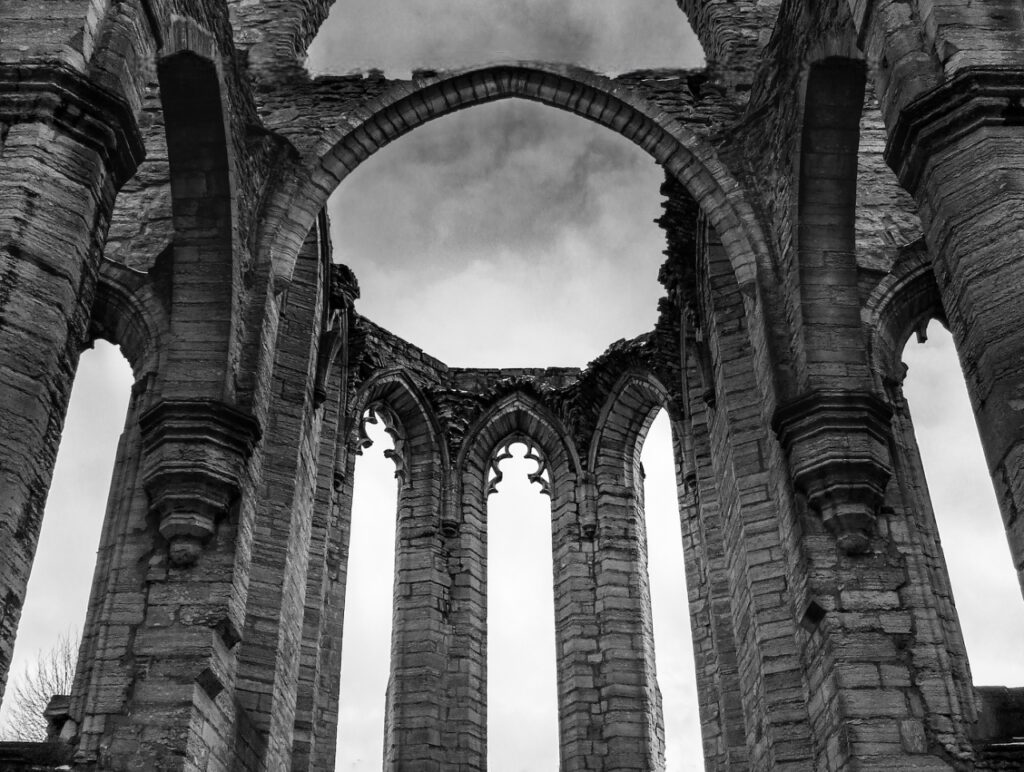
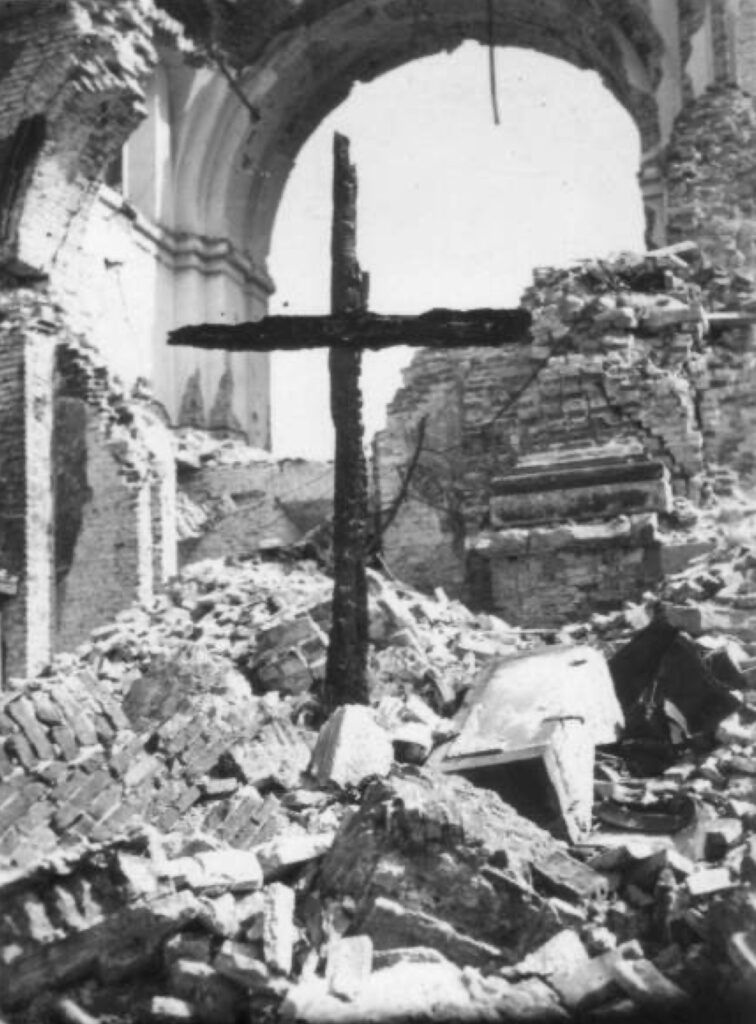
    But something has changed. Whenever I pass by a church building these days, a strange awareness emerges. Instead of perceiving a familiar testimony of divine reality, I am struck by a profound sense of vacancy. The structures that for so long had served as a “luminous sign of God” now seem to manifest only absence. The building is a house of bones; the edifice is empty.
    I sense, too, that this is not simply a reminder that church is the people, not the buildings in which they meet. No, this is something else. It is about the face of Christianity. This is an intimation of judgment, of a divine visitation marked by abandonment. And it’s been a long time coming.

    The scriptures illustrate God’s willingness to abandon the edifices associated with his presence, even those he himself ordained. In one instance, when the army of Israel is being defeated by the Philistines, Israel sends for the Ark of the Covenant, which they believe will save them. But Israel not only loses the battle, they surrender the Ark as well. The Holy Box, it turns out, is just a box. The prophets also learn this hard lesson. Years later, as Ezekiel sits among the exiles in Babylon, he envisions the glory of the Lord withdraw from the great temple. Jeremiah beholds the destruction of Jerusalem and laments, The Lord has rejected his altar and abandoned his sanctuary. The city of God and the temple bearing his name lie in ruins. The edifice is erased.

    And it is happening again. Our church buildings communicate nothing to the current culture, except, perhaps, a tired, irrelevant piety. Our liturgies—the conservative to the charismatic—have become, as Isaiah prophesies, precept upon precept, precept upon precept, line upon line, line upon line, here a little, there a little. The structures that once housed and manifested the reality of Christ are being abandoned by the Spirit and exposed as the shadows they have always been.

    This should come as no surprise. Divine judgment is increasingly apparent to those whose eyes are open. But it not only is coming upon the kingdom of the world. As Peter declares, It is time for judgment to begin with the household of God. And begin it has.


    “Once more I will shake not only the earth but also the heavens.” The words “once more” indicate the removing of what can be shaken—that is, created things—so that what cannot be shaken may remain.
    Hebrews 12:26-27
  • Double or Nothing

    “You have asked a difficult thing,” Elijah said, “yet if you see me when I am taken from you, it will be yours—otherwise, it will not.”
    2 Kings 2:10


    Hezekiah was a superstar among the Hebrew kings. He took over a kingdom rife with war and paganism, destroyed idols all over Judah, and reinstated lawful temple worship. He strengthened the defenses of Jerusalem by digging a tunnel to ensure access to water during the siege by the Assyrian king Sennacherib. And when the Assyrian armies taunted Jerusalem’s cowering citizens, he fervently prayed to God, who answered him with a miraculous deliverance. To top it off, when Hezekiah fell deathly ill, his appeal to the Lord resulted in a fifteen-year extension of his life. Hezekiah was one impressive ruler. Indeed, as the scriptures declare, there was no one like him among all the kings of Judah, either before him or after him. Hezekiah ranks right up there with David, Jehoshaphat, and the boy-king Josiah.

    But I recently stumbled on a passage that I had forgotten. Hezekiah had just proudly displayed his wealth to some Babylonian envoys when the prophet Isaiah showed up:

    Isaiah said to Hezekiah, “Hear the word of the Lord of hosts: Behold, the days are coming, when all that is in your house, and that which your fathers have stored up till this day, shall be carried to Babylon. Nothing shall be left, says the Lord. And some of your own sons, who will come from you, whom you will father, shall be taken away, and they shall be eunuchs in the palace of the king of Babylon.”

    Then Hezekiah said to Isaiah, “The word of the Lord that you have spoken is good.” For he thought, “There will be peace and security in my days.”

    That stopped me dead in my tracks. Isaiah divulges the upcoming judgment upon Judah and even on Hezekiah’s own sons, and all the king is concerned about is his own welfare? It’s like he figures he’s already done his thing for God; the future is now somebody else’s problem. It seems that all Hezekiah wants now is a nice life and a peaceful ride into the sunset.

    How different from Elisha. Apprentice to the great Elijah, Elisha reveals his true colors when it is revealed that his master is soon to be taken away. The account, recorded in 2 Kings, is almost comical. Elijah keeps telling his apprentice to stay put while he moves on to the next place, but Elisha will have none of it. He insists, “As surely as the Lord lives and as you live, I will not leave you.” This happens three times. Along the way, companies of local prophets—you know, the people with all the right answers—they confidently inform Elisha that God is going to take his master away that very day. “Yes, I know,” he snaps at them. “Be quiet.” Finally Elijah and Elisha cross the Jordan (with a little help from Elijah’s magic cloak) where Elijah asks his apprentice the ten-thousand-dollar question: “What can I do for you before I am taken from you?”

    The boldness of Elisha’s answer is astonishing: “Let me inherit a double portion of your spirit.” This takes some serious chutzpah.

    The sheer audacity of his request is underscored by Elijah’s reply. “You have asked a difficult thing.” No freaking kidding. Elijah’s the one and only God’s-not-in-the-whirlwind-or-the-earthquake-or-the-fire-but-in-the-small-still-voice guy. Elijah’s the guy who calls down fire from the sky and who lends his name to none other than John the Baptist, the very guy whom Jesus himself calls the greatest prophet of all. Elisha wants twice whatever that is? Whoa.

    Surprisingly, Elijah assents to this outrageous petition—with one important condition: “If you see me when I am taken from you, it will be yours—otherwise, it will not.” Elisha’s tenacity is rewarded. He sees the chariot of fire and gets what he wanted.

    It strikes me that Hezekiah and Elisha reflect two different kinds of Christians and even different kinds of churches. Some, like Hezekiah, have great track records of faith but have essentially retired from the fray. They see what’s coming down the pike but are content to glide into the Promised Land. As long as they are undisturbed, they are unconcerned. In my experience, most believers and too many churches are like Hezekiah.

    A precious few, however, are hungry. Like Elisha, they recognize that something earth-shattering is upon us. Unlike the crowd of prophets who know all the right answers (but keep at a comfortable distance) these unsettled believers are not satisfied with the status quo. Their track records mean little to them. They know that the visitation of God will not be awarded equally to everyone. They know that receiving is for the askers, finding for the seekers, and open doors for the persistent knockers.

    And thus comes the word of the Lord to many of us: “I know your works. You have the reputation of being alive, but you are dead. Wake up, and strengthen what remains and is about to die, for I have not found your works complete in the sight of my God. Remember, then, what you received and heard. Keep it, and repent. If you will not wake up, I will come like a thief, and you will not know at what hour I will come against you.” This is serious stuff.

    This new year I renew my commitment to call upon the Living God. I do not ask for comfort or contentment. I search for neither reassurance nor commendation. I do not seek even my own salvation. Famished beyond reckoning, I will cry out with Elisha, “Where is the Lord God of Elijah?”

    Nothing else matters.